I'll Take Distinctive Assets for $800
Bettina Dargie · 2026-07-27
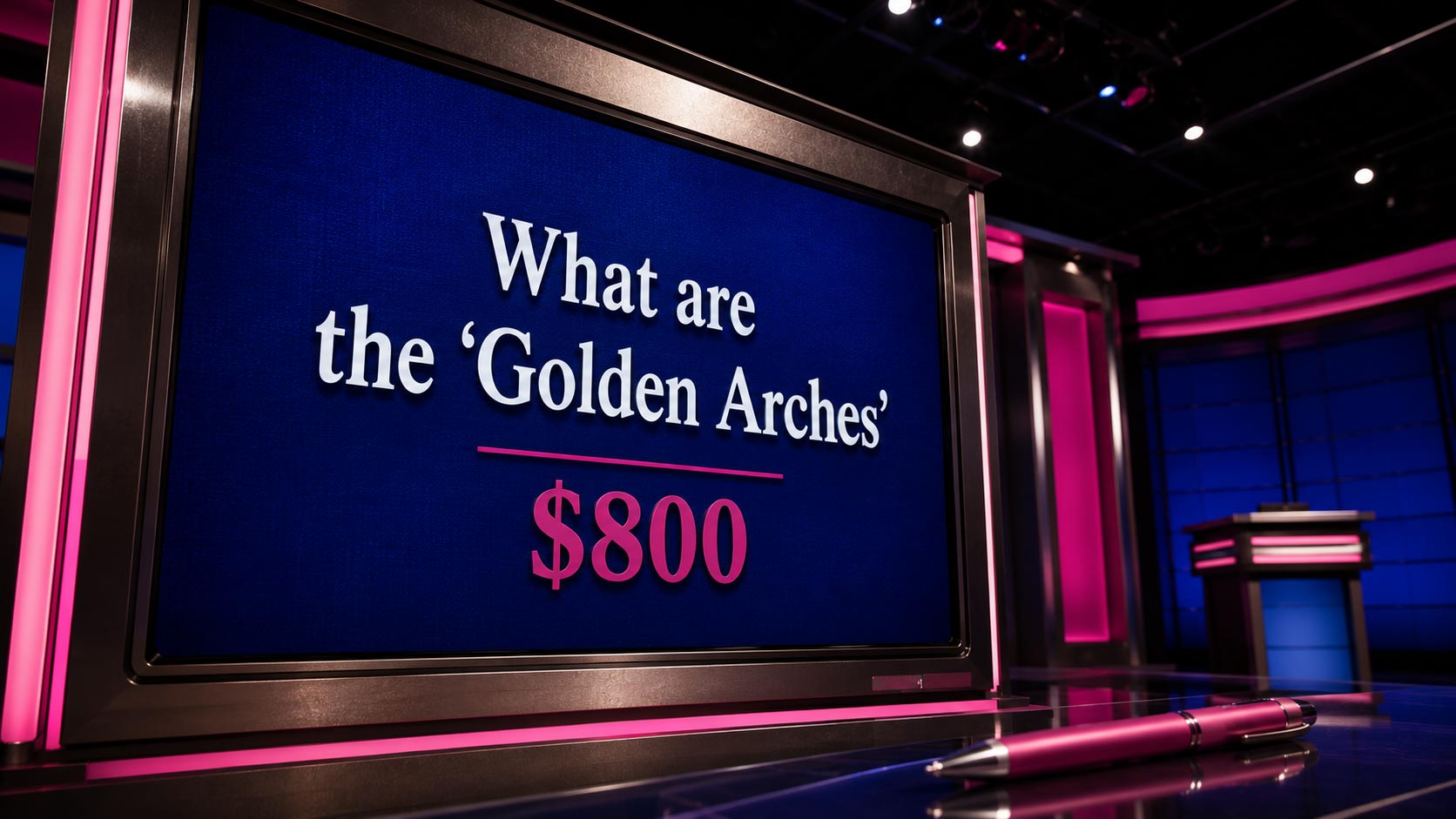
"Okay, but what actually is brand recognition — and why does it matter so much?" It sounds like marketing fluff right up until you see the machinery underneath.
Say someone’s wife wants new jewelry, and she drops hints to her husband for weeks. She leaves a little heart pendant on a chain open on her laptop. She brings up how good Audrey Hepburn looked staring into that window in that one movie. A certain robin’s-egg-blue box "accidentally" ends up on the counter. She never once said the store’s name but by now he knows exactly where he’s meant to go. If this was the game Jeopardy, he’d have already buzzed in: What is Tiffany’s.
The hint-dropping game
In Jeopardy you’re given clues to which, you give an answer — or the question, which is technically the answer (you know how it works!) Brands can live and die on this exact game.
Head-to-toe pink and purple on the ski hill: What is Barbie. A checkmark and the athlete who built his whole legend wearing them: What is Nike. White cursive on a red can, or the shape of the bottle you could find in the dark: What is Coca-Cola. Just a couple of clues, and you already know what the brand is.
It’s why Levi’s could get its own name tarped over at its own stadium — yes, this is the thing we talked about last week — and everyone still knew exactly whose building they were looking at.
A brand was never just its name. It’s the whole pile of pieces — the colours, the shape of the logo, the voice, the values, the promise, even the reputation — and any single one of them is a good enough clue to reach the answer. A couple of cues, and your brain will most likely think of one brand first.
Why your brain plays along
Underneath, it’s all memory — and branding, like Jeopardy, is a memory game. There’s real research on what makes trivia champions good, and it isn’t simply knowing more facts. A 2024 study found the best players had their two kinds of memory more tangled together: the facts they knew (semantic memory) were tied to where and how they learned them (episodic memory), so it all came back faster.
There’s also a thing called processing fluency: the easier something is for your brain to take in, the more you tend to like and trust it. Every time you see a colour or a logo, it gets a little easier to place — and your brain reads that ease as "familiar, safe, mine." Recognition feels good, and the feeling makes you trust what you recognized.
Your brand is the answer
In this game, you’re the answer and your customer is the contestant. Your branding is working when a clue comes up and your customers buzz in with your name (when you’re the one they think on first.) That reflex has a real name: mental availability, the odds your brand is the one that surfaces the moment a need appears. Ask a room for the website you search the internet with, and the buzz is What is Google. Even when people still know Yahoo or Bing, they don’t think of them right away; and they need to see them to remember. Recognizing Yahoo is awareness. Being Google is mental availability. You want to be Google.
You get there the way a trivia champ does and that’s by building with the memory structure of semantic and episodic memories hand in hand. First, your distinctive brand assets: the colour, the shape, the sound, the tangible things people file away and recognize. Second, the experience those assets get tied to — a memory your brand can anchor on, or the moment someone actually lived with your brand, how it felt, where they were. A fact sticks harder when it’s wired to a real experience, so you can’t build that second half in a vacuum. You have to root your brand in something genuinely relatable to your customer’s life. That’s why real strategy starts with who they actually are (what marketers call “day in a life”) what their days look like, where they go, what they already care about — so you can attach yourself to a memory they’ve already got, or help make one worth keeping.
Then it comes down to repetition to actually build that fluency. You keep showing up with the same assets and the same feeling, over and over, and every exposure makes the brand a little easier to place, until people slide from "I’ve seen that somewhere" to recognizing you on sight to your name being the first one out of their mouth.
What a clue is worth
All of this rewards knowing which clues to protect. Some of your cues are load-bearing — the very things people recognize you by — and those are the ones to guard; the rest you can evolve as you go. The costly mistake is swapping out the thing people actually find you with. Tropicana did exactly that in 2009 — it dropped the orange-with-the-straw for a plain glass of juice, sales fell about 20% in under two months, and PepsiCo put the old carton right back. Gap changed its logo the same year and pulled it after six days.
Tiffany, on the other hand, has guarded that exact blue for the better part of two centuries, which is why they can probably change their box shape to any thing they want but their colour alone can do the talking. And the brands that protect the right cues turn them into the most valuable thing they own — Interbrand puts Coca-Cola’s brand near $60 billion and McDonald’s around $53 billion, and a huge chunk of that is the script, the arches, the colours you can picture with your eyes shut. Value just sitting there, before they’ve sold a thing.
So when someone names your brand off a colour, a shape, a movie, a box - it’s years of the same cues, tied to a real feeling, sitting somewhere their brain already goes. Nobody handed them the answer. They got there one clue at a time.
That’s the game. The great brands are just the ones you can name before the name ever turns up.